




Sentiment Analysis
Customer opinions about products, services, and brands spread rapidly through social media and digital platforms. Sentiment analysis helps classify and interpret these opinions. Gaining timely insights into how customers think and feel provides significant competitive advantages—enabling companies to improve customer experience and fine-tune marketing strategies. For both large enterprises and small businesses, this tool becomes a powerful ally in driving data-driven decision-making.
Sentiment analysis—also known as opinion mining—is a process that identifies and categorizes emotions expressed in text about a specific topic. These emotions can be positive, negative, or neutral, and are detected using Natural Language Processing (NLP) techniques that interpret words and expressions. Then, machine learning classification algorithms assign a label to each piece of text, based on patterns learned from training data.
The technology pulls insights from a wide range of sources: social media platforms (X, Facebook, Instagram), online forums, product reviews, surveys, and even customer service emails.
For example, a sentence like “I’m thrilled with how fast the service was” would be classified as positive, while “The latest app update is a total disaster” would be marked as negative.
The goal is to provide a comprehensive view of user perception, not just as a snapshot in time, but as a continuous trend. This allows both enterprises and SMBs to adjust their business strategies based on real-world evidence, identifying what’s working—and what needs improvement.
Benefits
Real-Time Reaction and Brand Reputation Monitoring
Businesses can react quickly to situations that may affect their brand image. For instance, if a negative product experience starts trending on X (formerly Twitter), a monitoring system can issue an alert, allowing the company to respond quickly, clarify the issue, or offer solutions before reputational damage spreads.
Customer Segmentation Based on Sentiment
Companies can focus on highly satisfied customers to turn them into brand ambassadors, while addressing concerns from unhappy users with targeted retention strategies. From a strategic standpoint, sentiment data becomes a direct, unfiltered feedback channel for product development and optimization.
Accessibility for SMBs
The democratization of sentiment analysis is a game changer for small and medium businesses. Once exclusive to corporations with large analytics teams and budgets, now even smaller companies can access automated sentiment analysis platforms that deliver clear, actionable reports—enhancing their competitiveness and decision-making capabilities.
Impact on Organizational Culture
Sentiment analysis fosters collaboration across departments—from marketing to customer service—by providing real-time insights into how the company is perceived. This encourages teams to align on a common goal: delivering excellence and maintaining a strong reputation.
Implementation challenges
Despite its clear advantages, implementing sentiment analysis presents several key challenges that must be addressed:
Understanding Complex Language
One of the main hurdles is interpreting natural language, which is inherently complex. Sarcasm, irony, slang, and regional expressions can lead to misclassification or false sentiment detection. Constant evolution in how people communicate—especially on social media—demands that models be regularly updated to stay accurate.
Data Quality and Representativeness
If the sample of collected comments is too narrow or heavily skewed toward extreme opinions (only very positive or very negative), the results may not reflect the true customer sentiment. This can lead to biased insights and poor business decisions. It’s critical to implement robust data collection methods that capture a wide range of user perspectives.
Integration with Existing Systems
Implementing sentiment analysis often requires technological infrastructure and integration planning. For large enterprises, this may mean adopting cloud-based platforms with big data capabilities, as well as configuring real-time data pipelines for collection and cleansing. For SMBs, the challenge lies in selecting accessible tools and leveraging them effectively—without needing a full-scale technical team.
Data Privacy and Compliance
Privacy and data protection laws are a significant concern. It’s vital to comply with regulations like GDPR in Europe or local data protection laws, especially when handling sensitive or personal user information. Non-compliance can result in financial penalties and reputational damage.
Cultural and Organizational Alignment
To fully benefit from sentiment analysis, it must be embraced across the organization. Marketing, customer service, operations, and leadership must all trust the insights and act on them. This requires training, alignment of strategy, and fostering cross-functional collaboration. Otherwise, sentiment insights risk being reduced to reports with no tangible impact on customer experience or business competitiveness.
Frequently Asked Questions
Sentiment analysis enables businesses to accurately understand customer perspectives. Unlike traditional surveys, it captures spontaneous opinions shared on social media and digital platforms, offering a more authentic and real-time view of brand reputation.
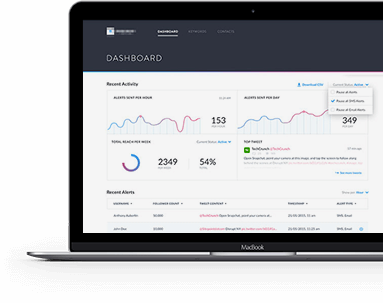
Specialized platforms and APIs track keywords and hashtags related to a brand across social networks. Then, NLP algorithms scan the content and classify the sentiment as positive, negative, or neutral. The results are often displayed in dashboards that show sentiment trends and highlight relevant user comments in real time.
Accuracy generally ranges from 70% to 90%, depending on the complexity of the language. Sarcasm, irony, and slang can still pose challenges for even the most advanced models. However, as more data and human feedback are incorporated, these models continually improve in performance.
Not anymore. Today, many cloud-based sentiment analysis solutions offer scalable plans at affordable costs. This makes it accessible for small and medium-sized businesses (SMBs) to monitor customer opinions without heavy investment in infrastructure or specialized teams.
Beyond marketing, sentiment analysis is used in:
-
Customer service – to detect dissatisfaction early
-
Human resources – to assess employee sentiment and engagement
-
Product development – to identify feature requests or recurring issues
-
Finance – to measure market sentiment around specific companies or sectors before making investment decisions
Primarily text data from social media, reviews, blogs, and surveys. Internal sources like support emails, ticketing systems, and live chat conversations can also be analyzed—as long as privacy regulations are respected.
It depends on the volume of data and update frequency. For a one-time analysis, insights can be delivered within a few hours. For continuous monitoring, real-time or daily updates are common via dashboards and automated alerts.
ROI can be measured through:
-
Improved customer satisfaction (e.g., increase in NPS)
-
Reduction in formal complaints
-
Early detection of potential issues that could otherwise lead to significant financial or reputational damage
Yes. Some platforms can initiate automated workflows based on sentiment signals. For instance, if negative comments spike, the system can alert the customer support team. Similarly, special offers can be automatically sent to users with neutral feedback to encourage loyalty and brand advocacy.

Incubado por
e-Labs Incubator