


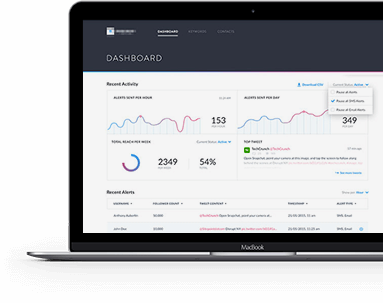



Dashboards
In today’s data-driven world, business dashboards (or control panels) have become indispensable for organizations of all sizes—from SMEs to multinational corporations. Companies increasingly need to synthesize complex data and present it in clear, actionable formats. Dashboards consolidate and visualize key business metrics (KPIs) in real time (or near real time), enabling teams to:
✔ Identify opportunities faster
✔ Correct errors before they escalate
✔ Make agile decisions in competitive markets
In Latin America, adoption is accelerating due to:
• User-friendly analytics platforms
• Urgent digital transformation needs
• Growing competition with global markets
What Are Business Dashboards?
A dashboard is a visual interface that consolidates, organizes, and displays real-time KPIs through:
→ Interactive charts & graphs
→ Dynamic tables & alerts
→ Customizable data widgets
This transforms raw data into actionable business intelligence, giving executives and teams a 360° view of company performance.
Dashboards vs. Excel: Why Upgrade?
| Feature | Excel Reports | Modern Dashboards |
|---|---|---|
| Data Updates | Manual entry | Auto-sync (CRM/ERP/API) |
| Interactivity | Static tables | Filters, drill-downs, comparisons (e.g., Mexico vs. Colombia sales) |
| Scalability | Crashes with big data | Handles 100K+ monthly transactions |
| Latency | Hours/days-old data | Near real-time (e.g., live inventory) |
Forrester (2023) Findings: Companies switching from Excel to dashboards cut reporting time by 40%—a game-changer in fast-moving markets like Latin America.
The Gartner Standard for Effective Dashboards
A best-in-class dashboard answers:
- What’s happening? (Live metrics)
- Why is it happening? (Trend analysis)
- What should we do? (Prescriptive insights)
Beneficios
1. Faster, Data-Backed Decisions
-
Real-time KPIs minimize decision lag
-
Anomaly detection alerts prevent costly errors
2. Lower Costs & Fewer Errors
-
Automated reporting eliminates manual Excel work
-
Single source of truth reduces miscommunication
3. Cross-Department Visibility
-
Unify data from finance, marketing, operations
-
Spot correlations (e.g., marketing spend → inventory turnover)
4. Customizable Analytics
-
Filter by region, product, customer segment
-
Compare markets (e.g., Brazil vs. Argentina performance)
5. Scalable for Growth
-
Supports data & user volume growth
-
Critical for Latin America’s rapid digital expansion
6. Improved Team Alignment
-
Shared dashboards foster collaboration & accountability
-
Every team sees their impact on company goals
7. Affordable for SMEs
-
70% of Latin American SMBs still underuse data analytics
-
Cloud-based solutions (from $15/user/month) enable smaller firms to compete
Retos de implementación
1. Data Quality & Integration
❌ Problem: Siloed, inconsistent data → flawed insights
✅ Fix: Implement automated data validation & ETL pipelines
2. Choosing the Right Platform
❌ Problem: Overwhelming options (Power BI, Tableau, Qlik, Metabase)
✅ Fix: Match tools to budget, IT infrastructure & team skills
3. Building a Data Culture
❌ Problem: Dashboards ignored without leadership buy-in
✅ Fix: Train teams on KPI interpretation & data-driven rituals
4. Security & Compliance
❌ Problem: Risks with centralized financial/customer data
✅ Fix: Role-based access + SOC 2-compliant hosting
5. Legacy System Hurdles
❌ Problem: Costly custom integrations with old software
✅ Fix: Phased migrations + middleware APIs
Industry Success Stories
🏪 Retail: Mercadona (Europe)
-
Optimized supply chains with live sales/inventory dashboards
-
Reduced stockouts by 22%
🚚 Logistics: ControlT
-
35% faster incident response via automated operation alerts
-
Unified data from 200+ carrier partners
🏥 Healthcare: Fracttal
-
Predictive maintenance dashboards ensure 92% medical equipment uptime
-
Saved hospitals $280K/year in emergency repairs
Preguntas frecuentes
Dashboards centralize critical data in a single visual interface, displaying key performance indicators (KPIs) and essential metrics clearly. This enables:
✔ Real-time business monitoring
✔ Quick anomaly detection
✔ Data-driven decision-making
Not entirely. Excel remains useful for ad-hoc analysis and specific simulations. However, dashboards excel when you need:
→ Automated reporting
→ Interactive visualizations
→ Multi-source data integration
→ Frequent updates
Dashboards offer superior scalability, accessibility, and interactivity compared to spreadsheets.
No—they benefit all departments:
• HR: Tracks recruitment & turnover
• Marketing: Measures campaign conversions
• Operations: Monitors production & quality
• Logistics: Manages delivery times & inventory
Yes! Affordable options include:
✔ Microsoft Power BI (pay-as-you-go)
✔ Metabase (open-source)
✔ AWS QuickSight
IDC (2023): Adoption of these tools grew 32% in Mexico and Brazil, proving even SMBs can benefit with moderate costs.
Absolutely. Most platforms support:
✔ Big Data integrations
✔ Cloud database connections
Ideal for businesses with 100K+ monthly transactions, ensuring smooth performance without report delays.
Modern dashboards include:
✔ Encryption protocols
✔ Role-based access controls
However, companies must ensure:
→ Secure data source connections
→ Compliance with industry regulations (especially for sensitive data)
Key factors include:
• Limited cloud infrastructure
• Higher licensing costs
• Emerging data culture
Yet, rising competitiveness and local startups are accelerating growth—making LATAM a high-potential market.
✅ Retail: Grupo Éxito (Colombia) reduced inventory waste by 20% using predictive dashboards.
✅ Fintech: Nubank (Brazil) monitors 1M+ daily transactions in real time for fraud detection.
✅ Manufacturing: Siemens (Europe) combines IoT + dashboards, cutting operational costs by 15% (McKinsey, 2023).
Yes! Many cloud-based or open-source tools (e.g., Metabase) offer:
✔ Low upfront costs
✔ Easy ERP integrations (SAP Business One, Tango)
✔ Minimal IT support needed
By transforming complex data into actionable insights, they help leaders:
✔ Spot trends faster
✔ Evaluate results efficiently
✔ Stay proactive in volatile markets
Whether for enterprises or SMBs, dashboards drive competitiveness and agility.

Incubado por
e-Labs Incubator